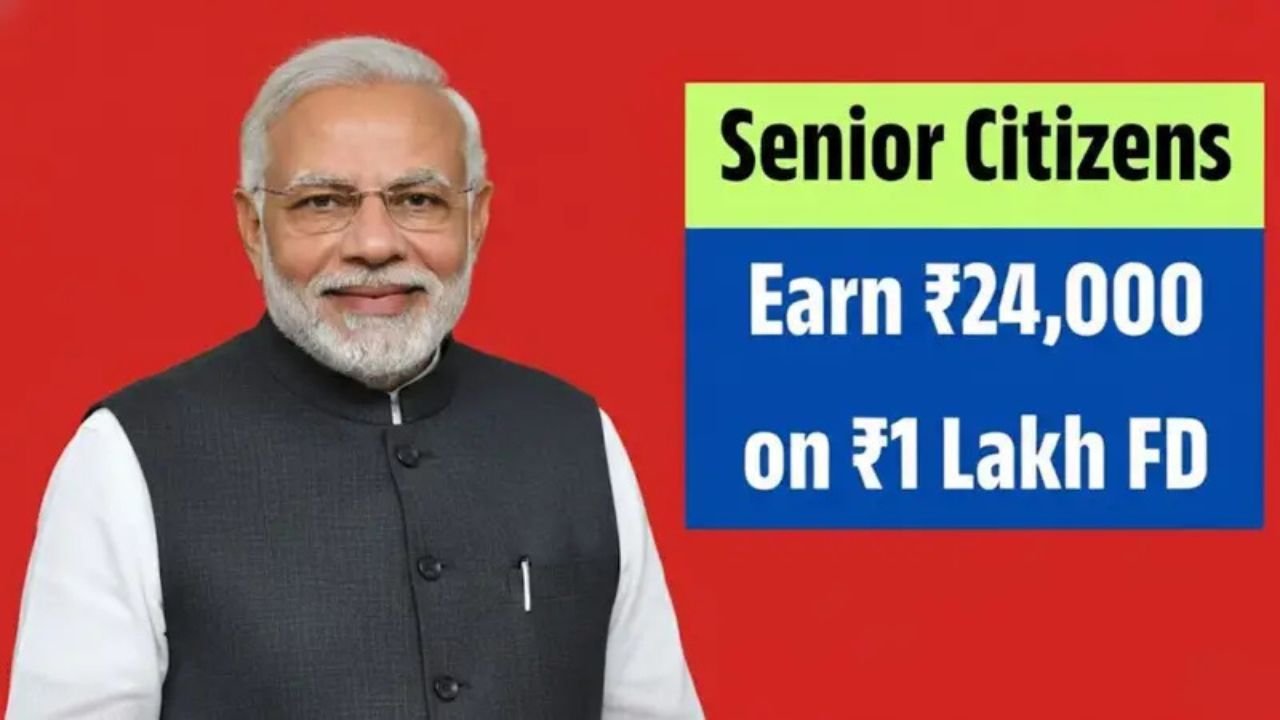
Senior Citizen FD 2026 Explained: For many retirees, financial peace of mind is not about chasing high returns, but about securing stability. In 2026, fixed deposits (FDs) continue to be a cornerstone of retirement planning for senior citizens across India. They offer a sanctuary of predictability in an often volatile financial landscape. Recently, you may have encountered striking claims, such as a ₹1 lakh FD generating ₹24,000 in annual income. While such figures can capture attention, it’s crucial to separate fact from misconception to make informed decisions for your golden years.
The Enduring Appeal of Fixed Deposits for Retirees
The primary draw of fixed deposits lies in their inherent safety and certainty. Unlike market-linked investments, the principal amount and the interest rate are guaranteed at the time of deposit. This assurance allows retirees to budget their monthly expenses without anxiety. Furthermore, the flexibility in choosing tenure—from a few months to several years—and the option to receive interest payouts monthly, quarterly, or annually, provide essential liquidity and cash flow management. For those relying on a pension or finite savings, this control over their income stream is invaluable. The additional interest rate benefit of typically 0.25% to 0.50% offered by most banks to senior citizens is a respectful nod to their need for dependable income.
Understanding Realistic Returns in 2026
Interest rates are influenced by broader economic policies and conditions. In the current climate of 2026, senior citizens can generally expect FD interest rates to range between 7.5% and 8.5% per annum from most scheduled commercial banks and post office schemes. These rates provide a transparent and fair return on investment. To set realistic expectations, let’s break down what a ₹1 lakh investment truly yields.
Detailed Income Breakdown from a ₹1 Lakh FD
| Investment Amount | Interest Rate (p.a.) | Annual Interest Income | Approximate Monthly Payout |
|---|---|---|---|
| ₹1,00,000 | 7.5% | ₹7,500 | ₹625 |
| ₹1,00,000 | 8.0% | ₹8,000 | ₹667 |
| ₹1,00,000 | 8.5% | ₹8,500 | ₹708 |
As the table clearly illustrates, the annual income from a ₹1 lakh FD is in the range of ₹7,500 to ₹8,500, not ₹24,000. The ₹24,000 figure likely originates from calculating cumulative interest over multiple years. For instance, if you invest ₹1 lakh at 8% per annum in a cumulative FD (where interest is reinvested), the total value after three years would be approximately ₹1,25,971. The interest earned over those three years sums to about ₹25,971, which rounds to the viral claim. However, this is not annual income; it is the total growth over a longer period.
Important Financial Considerations
Taxation on FD Interest
Interest earned from fixed deposits is fully taxable under the head “Income from Other Sources.” It must be added to your total annual income and taxed according to your applicable slab rate. Banks deduct TDS (Tax Deducted at Source) at 10% if the interest income in a financial year exceeds ₹50,000 (₹40,000 for non-seniors). Senior citizens can submit Form 15H to avoid TDS if their total annual income is below the taxable limit. Planning for this tax liability is essential to understand your net, take-home income.
Who Should Consider an FD?
Senior citizen FDs are ideally suited for:
- Retirees seeking capital protection above all.
- Individuals needing a predictable, supplementary income to cover routine expenses.
- Those who prefer financial simplicity without the need to monitor stock markets or fund NAVs.
- As part of a larger, diversified portfolio that may also include debt mutual funds, senior citizen savings schemes (SCSS), or annuity plans for balanced growth and income.
Crafting a Smart Retirement Income Strategy
Relying solely on one fixed deposit is rarely the most effective strategy. Consider these approaches for a more resilient financial plan:
- Laddering FDs: Create multiple FDs with varying maturity dates (e.g., one maturing each year). This provides regular access to lumpsums without breaking all deposits prematurely and allows you to reinvest at potentially higher rates.
- Diversification: Allocate savings across different instruments. For example, use SCSS for its higher interest rate and quarterly payouts, FDs for medium-term goals, and a portion in low-risk debt mutual funds for potential better post-tax returns.
- Clear Objective Setting: Designate specific FDs for specific needs—one for medical emergencies, one for vacation funds, and others for monthly income. This brings clarity and discipline to your finances.
Final Thoughts Clarity Leads to Confidence
Fixed deposits remain a pillar of trust and security in retirement planning. The key is to approach them with clear, accurate information. The promise of ₹24,000 annual income from a ₹1 lakh deposit is a misunderstanding of long-term compound growth. By acknowledging the actual, reliable returns FDs offer—approximately ₹660 to ₹710 per month on a ₹1 lakh investment—you can build a realistic and stress-free budget. Complementing FDs with other sensible instruments will help create a robust financial safety net, letting you enjoy your retirement with the dignity and peace you deserve.
Frequently Asked Questions (FAQ)
1. Can I really earn ₹24,000 per year from a ₹1 Lakh FD?
No, that is not possible at prevailing interest rates. The ₹24,000 figure represents approximate cumulative interest over 3-4 years, not annual income.
2. What is the current average FD interest rate for senior citizens in 2026?
As of 2026, senior citizens can typically expect interest rates between 7.5% and 8.5% per annum, depending on the bank, tenure, and broader economic conditions.
3. How is the interest from my senior citizen FD taxed?
The interest is fully taxable and added to your total income. TDS is deducted by the bank if your interest income exceeds ₹50,000 in a financial year. You can avoid TDS by submitting Form 15H if your total income is below the taxable limit.
4. Should I choose a monthly interest payout or a cumulative FD?
Choose a monthly payout if you need the interest as a regular income to cover expenses. Opt for a cumulative FD if you do not need immediate income and want your interest to be reinvested to benefit from compounding, leading to a larger lumpsum at maturity.
5. Are senior citizen FDs completely risk-free?
FDs from scheduled commercial banks are considered very low-risk and offer capital safety, especially within the ₹5 lakh deposit insurance cover provided by DICGC. However, they carry inflation risk (returns may not always outpace inflation) and reinvestment risk (rates may be lower when your FD matures).
6. What documents are required to open a senior citizen FD?
You generally need proof of identity (PAN card, Aadhaar), proof of address, passport-sized photographs, and proof of age to avail the senior citizen rate. The process can often be completed online through net banking.