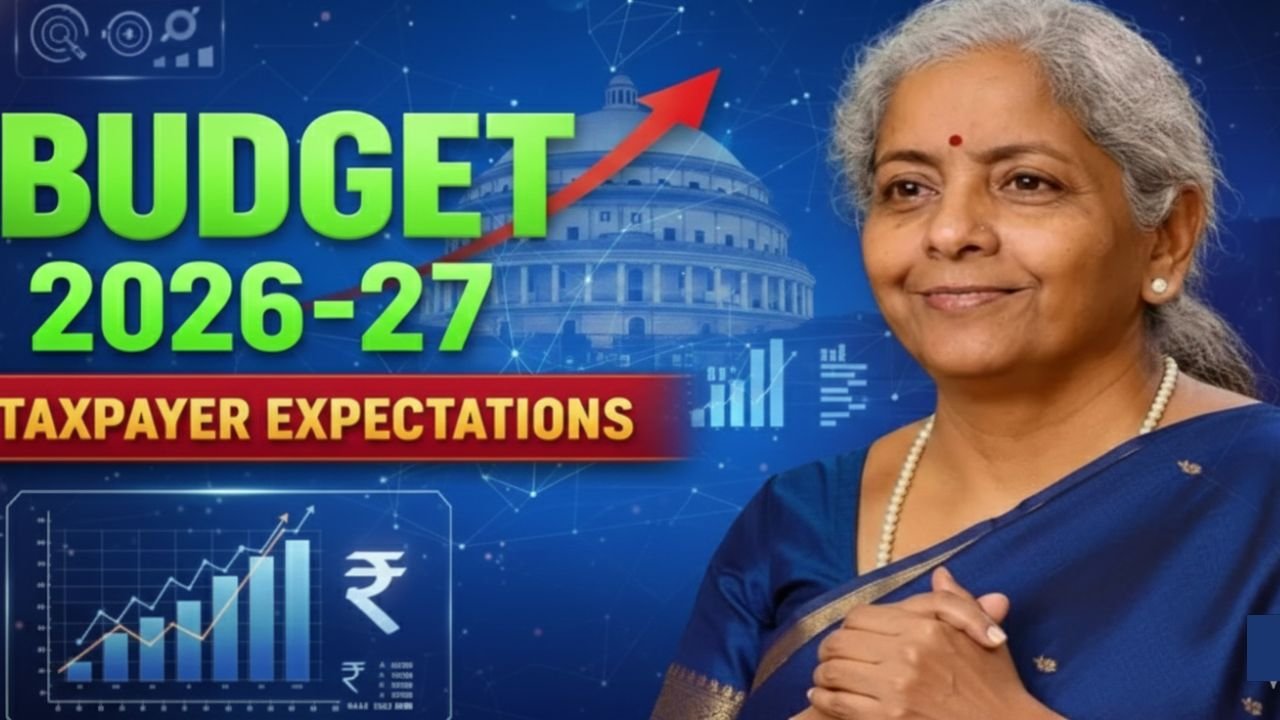
Union Budget 2026 : As the presentation of the Union Budget for the 2026-27 fiscal year approaches, citizens across India are keenly awaiting announcements that could impact their personal finances. With economic shifts and evolving financial needs, this budget is anticipated to address concerns around disposable income, simplification of tax structures, and providing meaningful relief to taxpayers, particularly salaried individuals and middle-class families.
Expected Revisions to Income Tax Slabs
A central point of discussion in the lead-up to the budget is the potential restructuring of income tax slabs. Many economists and citizens have pointed out that the current slab thresholds, set several years ago, do not fully account for the gradual increase in the cost of living and wage inflation. There is a growing expectation that the government may recalibrate these slabs, potentially raising the basic exemption limit. Such a move would directly increase the take-home pay for a significant portion of the workforce, providing immediate financial relief and potentially stimulating domestic consumption. A more progressive and rationalised slab structure could also serve to simplify tax planning for millions.
Anticipated Tax Changes at a Glance (Budget 2026 Expectations)
| Area of Focus | Current Challenge | Potential Change in Budget 2026 |
|---|---|---|
| Income Tax Slabs | Thresholds not aligned with current cost of living. | Increase in basic exemption limit; widening of existing slabs for lower and middle-income groups. |
| New Tax Regime | Limited popularity due to lack of deductions. | Possible inclusion of key deductions or increased rebate to enhance attractiveness. |
| Standard Deduction | Amount has not kept pace with inflation and rising work-related costs. | Increase in the deduction limit for salaried individuals and pensioners. |
| Middle-Class Relief | High tax outflow affecting disposable income and savings capacity. | Enhanced Section 80C limit, reduced surcharge, or new deductions for education/healthcare. |
| Capital Gains Tax | Complex structure with varying holding periods and rates for different assets. | Simplification and uniformity in holding periods; potentially lower long-term capital gains rates. |
| Digital Compliance | Need for further streamlining and error reduction. | Expansion of pre-filled ITR forms, faster refund processing, and more intuitive tax filing portals. |
Enhancing the New Tax Regime’s Appeal
Introduced as a simpler alternative to the old regime, the new tax system offers lower rates but forgoes most deductions and exemptions. While straightforward, its adoption has been measured, as many taxpayers find value in the specific benefits of the old system. For Budget 2026, it is widely speculated that the government may introduce refinements to make the new regime more attractive. This could involve incorporating certain popular deductions, increasing the rebate available under Section 87A, or adjusting the slab rates further. The goal would be to strike a balance between simplicity and providing enough incentives to encourage a broader transition, ultimately streamlining the tax filing ecosystem.
Revisiting the Standard Deduction
The standard deduction, a fixed amount deducted from salary income to account for employment-related expenses, is another area ripe for review. Since its last revision, expenses related to healthcare, transportation, and professional necessities have risen. An increase in the standard deduction limit is a strong possibility in the upcoming budget. This measure would be a straightforward and effective way to boost the disposable income of salaried employees and pensioners, offering a cushion against inflation without complicating the tax code. It is seen as a direct method to put more money back into the hands of the average taxpayer.
Focus on Middle-Class Financial Well-being
Providing tangible support to the middle class is expected to be a key theme of Budget 2026. Beyond slab changes, this could manifest through adjustments in surcharge rates for upper-middle-income brackets, enhancing limits for deductions under sections like 80C for investments, or introducing new incentives for home loan borrowers. Supporting this demographic is not only a social imperative but also an economic one, as their consumption is a major driver of domestic demand and growth.
Rationalising Capital Gains and Investment Rules
The investment community is looking forward to potential clarifications and reforms in capital gains tax structure. A long-standing request has been to harmonise the holding periods and tax rates for different asset classes like equities, real estate, and debt instruments to reduce complexity. Furthermore, incentives to boost retail participation in markets and long-term savings products like the National Pension System (NPS) could be announced. Such reforms would aim to foster a more robust culture of long-term financial planning and investment.
Frequently Asked Questions (FAQs)
Q1: When will the Union Budget 2026 be presented?
A1: The Union Budget for the fiscal year 2026-27 is typically presented by the Finance Minister in Parliament on February 1st, 2026.
Q2: What is the key difference between the old and new tax regimes?
A2: The old tax regime offers lower taxable income through numerous deductions and exemptions (like HRA, 80C, 80D) but has higher slab rates. The new regime offers significantly lower slab rates but comes with very few provisions for deductions, making it simpler but not always more beneficial.
Q3: How would an increase in the standard deduction help me?
A3: An increase in the standard deduction would directly reduce your taxable salary income. For example, if the limit is raised by ₹25,000, your taxable income would decrease by that amount, leading to lower tax liability and higher monthly take-home pay.
Q4: Should I wait for the budget to make my tax-saving investments?
A4: It is generally advisable to plan your investments based on current rules. While the budget may enhance certain limits, the core instruments (ELSS, PPF, NPS, insurance) will likely remain relevant. You can adjust your strategy after the budget announcements if needed.
Q5: Are the changes discussed in this article confirmed?
A5: No, the points discussed are based on expert analysis, pre-budget consultations, and public expectations. The actual policy changes will only be confirmed when Finance Minister Nirmala Sitharaman presents the budget in Parliament.
As the nation awaits the final announcements, the overarching hope is for a balanced budget that fosters economic resilience, eases the compliance burden, and empowers individuals with greater financial security and confidence for the year ahead.